
Occupational Therapy
-
Does your child have difficulty holding a pencil or crayon?
Is their handwriting hard to read?
Do they express hand tiredness or soreness when writing?
Do they struggle with cutting, coloring, or completing crafts?
Do small hand tasks like buttons, Legos, or puzzles feel challenging?
Your child may benefit from fine motor therapy, which strengthens hand skills needed for writing, drawing, cutting, and other daily tasks.
-
Does your child seem clumsy or uncoordinated compared to peers?
Do they struggle with balance, jumping, climbing, or playground activities?
Do they tire easily during physical activities?
Do they avoid sports or active play?
Your child may benefit from gross motor support, which helps children develop strength, coordination, balance, and body awareness for everyday movement and play.
-
Does your child have difficulty copying shapes, letters, or drawings?
Do they struggle to copy words or information from the board at school?
Do you notice frequent letter or number reversals when writing?
Does their writing have inconsistent spacing between letters or words?
Do they have difficulty keeping their writing on the line?
Do puzzles, mazes, or building activities feel challenging?
Your child may benefit from visual-motor therapy, which supports how children process visual information and coordinate it with hand movements.
-
Does your child have difficulty sharing toys, following another child’s play ideas, or playing together with the same toys?
Do they struggle with taking turns during games or activities?
Do they become easily frustrated when play doesn’t go their way or when rules change?
Do they have trouble waiting, stopping their body, or controlling impulses during games or group play?
Your child may benefit from play-based occupational therapy, which helps children develop the foundational skills needed for successful play with others. Therapy focuses on skills like joint attention, turn-taking, cooperative play, frustration tolerance, and impulse control so children can participate more confidently with peers.
-
Does your child become upset with certain clothing like socks, tags, or seams?
Do everyday sounds like hand dryers, vacuum cleaners, or crowded spaces feel overwhelming?
Does your child avoid messy play like finger paint, sand, or certain food textures?
Do they constantly seek movement such as spinning, jumping, crashing, or climbing?
Do they have trouble sitting still, focusing, or staying calm in busy environments?
Do hair brushing, nail cutting, or tooth brushing lead to strong reactions?
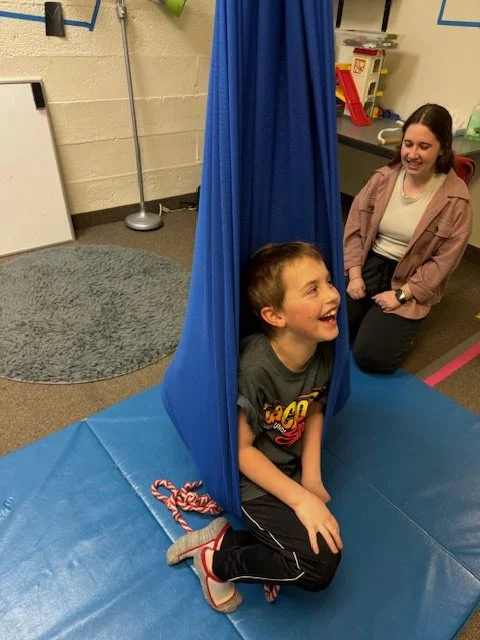
Your child may benefit from sensory integration therapy, which helps children better process and respond to sensory information in their environment. Therapy helps children better process and respond to sensory information so they can feel more comfortable and participate more fully in everyday activities.
-
Does your child have difficulty recognizing when they are hungry, tired, or need the bathroom?
Do they struggle to notice when their body is becoming overwhelmed or upset?
Do they have trouble identifying or describing how their body feels?
Your child may benefit from interoception support, which helps children build awareness of internal body signals and understand how those signals relate to emotions and regulation.
-
Does your child have big reactions to everyday challenges?
Do they have difficulty calming down when upset or frustrated?
Do transitions or unexpected changes lead to meltdowns?
Do they need help recognizing and managing their emotions?
Your child may benefit from self-regulation support, which helps children develop tools to understand their emotions, cope with challenges, and feel more confident navigating daily experiences.
-
Does your child need extra help with everyday tasks like getting dressed, brushing teeth, or using utensils?
Do they struggle with buttons, zippers, or tying shoes?
Is it difficult for them to stay organized with daily routines?
Do simple self-care tasks take a long time or lead to frustration?
Your child may benefit from support with self-care tasks in occupational therapy, which helps children build the skills and independence needed for everyday activities at home, school, and in the community.
-
Do they need frequent reminders to complete chores or everyday responsibilities?
Do they have difficulty managing time or following routines independently?
Does your child require increased support to participate in community activities like navigating a store or ordering food?
Do they need support learning skills like money management or making purchases?
Do they struggle with preparing simple meals or completing basic cooking tasks?
Your child may benefit from occupational therapy support for instrumental activities of daily living (IADLs). IADLs are the everyday skills that help older children and teens participate more independently in home, school, and community life. Therapy focuses on building organization, time management, problem-solving, and confidence in managing real-world tasks and responsibilities.
-
Does your child have difficulty staying organized or completing tasks independently?
Do they struggle with planning, following multi-step directions, or managing time?
Do transitions or changes in routine feel especially challenging?
Do they become easily overwhelmed by schoolwork or daily responsibilities?
Your child may benefit from executive functioning support, which helps children build skills like planning, organization, problem-solving, and flexible thinking.
Not sure where to start?
Every child’s needs are different. Our team is here to help you determine the best next step for your family.